noteworthy
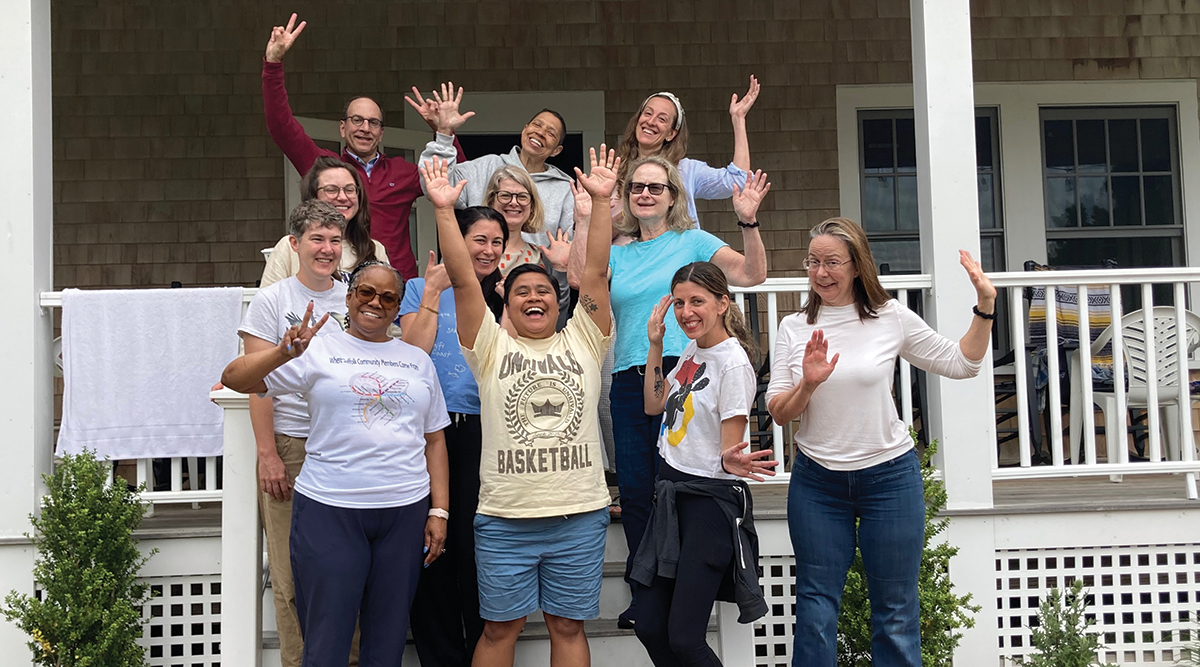
In June, on a nearly perfect early-summer’s day, 11 Suffolk faculty members gathered at a small retreat center on Cape Cod for the first-ever residential faculty writing retreat sponsored by the Center for Teaching & Scholarly Excellence (CTSE). As they arrived, one by one, many were drawn down the long lawn to the beach to watch the tide go out and the gulls soar.
But they didn’t linger on the beach for long. As one participant commented, “We knew we had to make the most of our time.”
Time. For faculty members, there never seems to be enough of it. For many, research and writing in their field of study is a personal and professional passion, one that infuses their teaching with energy, creativity, and freshness. Yet all too often, research and writing fall to the bottom of the priority list, and the longer projects are neglected, the more difficult they are to return to.
Research has shown that off-site university writing retreats not only increase scholarly productivity but also have the potential to make academic workplaces healthier. They give faculty members the chance to step out of their professional roles and be themselves with the people with whom they work. Such retreats can inspire faculty to become better teachers, co-workers, and leaders, and increase their likelihood of staying at their universities. This is strikingly good news in an era when higher education faces a wide range of challenges.
During their two days on the Cape, faculty members worked intently by day, revising scholarly articles, writing book proposals, and completing footnotes for book chapters. Yet it was in the evenings, around bonfires and kitchen counters, that real transformation appeared to be taking place. Conversations were sometimes raucous, covering everything from how to develop students’ writing skills without them relying on AI to how to balance childcare and dinner preparation with writing time.
“Writing is lonely work,” one faculty member said. “But here we were alone all together. It was so helpful to be surrounded by people doing the same kind of work with intensity.”
The benefits of such retreats for faculty, comments CTSE Assistant Director and retreat facilitator Elizabeth Thompson, extend well beyond words on a page. They foster connection, collegiality, and a stronger sense of community. Adds CTSE Director Rachel Plews, “We are committed to helping Suffolk educators thrive in all areas of their academic careers, including their scholarship.”
Return to Table of Contents
FALL 2026
Photographs: Michael J. Clarke